The Science of Haldi: Why Cold Stone-Ground Salem Turmeric Beats High-Heat Commercial Powder
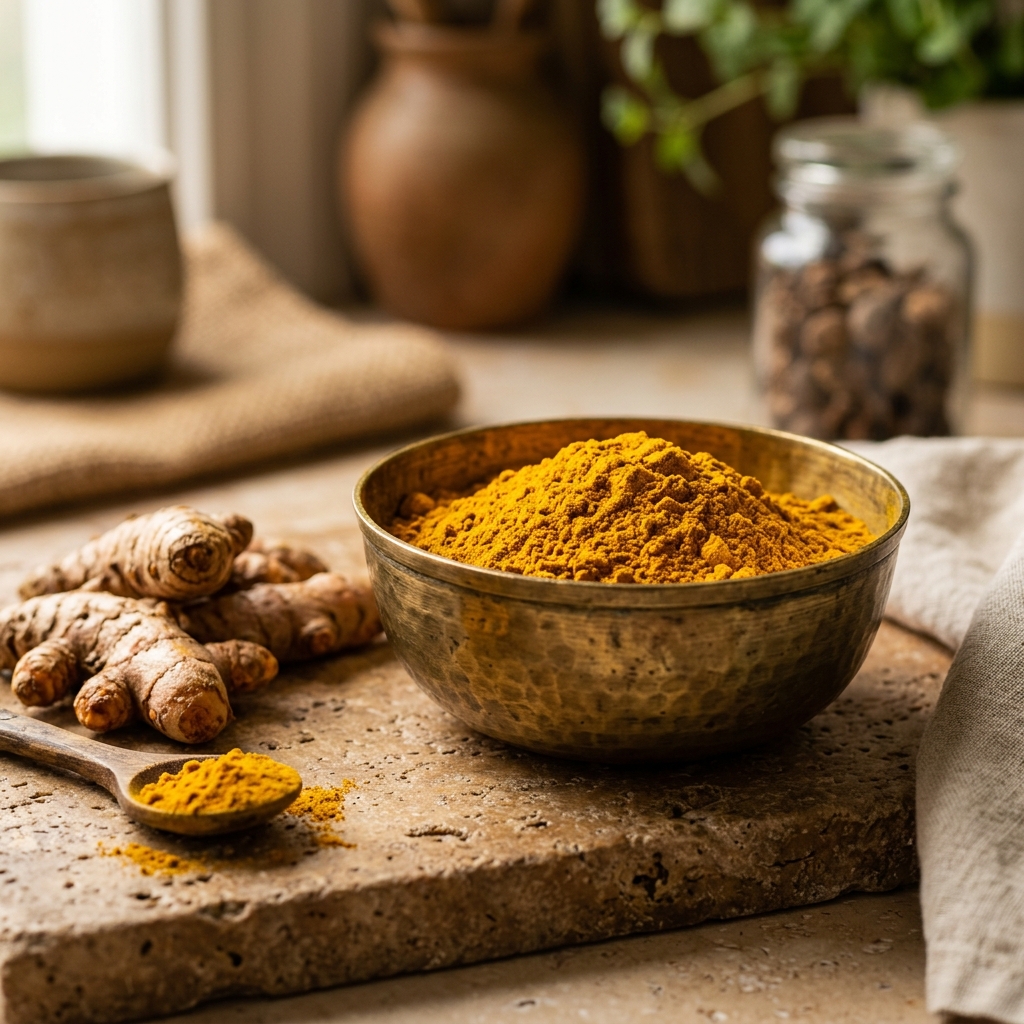
Turn over almost any package of commercial turmeric in your supermarket, and you will see the word “Pure” boldly printed across the label. Yet in Indian kitchens and Ayurvedic wellness traditions, families frequently wonder why modern turmeric powder lacks the golden glow, pungent earthy aroma, and healing potency that our grandparents swore by.
The Dark Secret of Industrial Spice Milling: The 80°C Problem
Most large commercial spice corporations process raw turmeric rhizomes through giant industrial hammer mills running at thousands of RPM. The friction created inside these heavy steel chambers generates temperatures between 70°C and 85°C (158°F – 185°F).
Turmeric’s biological miracles are driven by two delicate components:
- Curcuminoids: The prized natural color and flavor polyphenols.
- Turmerones: The volatile essential oils responsible for turmeric’s pungent aroma and for enhancing cellular curcumin absorption.
When exposed to 80°C commercial friction, up to 60% of these volatile oils evaporate into thin air, leaving behind a dull, heat-damaged yellow residue with severely compromised natural aroma and flavor.
Why Single-Origin Salem Turmeric is King
Native to the mineral-rich soils of Salem in Tamil Nadu, authentic Salem Haldi is globally celebrated for its naturally high curcumin percentage (ranging between 3.5% to 4.5%, compared to standard commercial varieties averaging barely 1.8% to 2%). Its deep, golden-orange hue and rich natural oil content make it the premier choice for both gourmet cooking and daily Ayurvedic golden milk.
3 Quick Home Tests to Detect Turmeric Adulteration
Recent consumer safety investigations have uncovered widespread adulteration in mass-market ground spices, ranging from cheap starches to hazardous toxic dyes like Metanil Yellow and Lead Chromate. Here is how you can verify your turmeric at home in 60 seconds:
- The Glass Water Settle Test: Add 1 teaspoon of turmeric powder to a glass of lukewarm water without stirring. Leave it undisturbed for 15 minutes. Pure stone-ground turmeric will slowly settle at the bottom of the glass, leaving the water clear and pale. If the water immediately turns murky bright artificial yellow, chemical water-soluble dyes or chalk powder are present.
- The Dilute Acid / Lemon Test: Mix a pinch of turmeric with a teaspoon of water and add a few drops of lemon juice or vinegar. Pure turmeric will remain bright golden yellow. If it turns pink or purplish-red, Metanil Yellow dye has been added.
- The Palm Rub Test: Rub a small pinch between dry palms for 10 seconds. Pure Salem Haldi leaves a persistent golden-orange essential oil stain that does not wash off with plain water instantly. If it leaves powdery white or dull residue, starch fillers were blended into it.
The Golden Milk Bio-Availability Formula (Haldi Doodh)
Curcumin by itself has poor bioavailability in the human digestive tract. To unlock its full cellular anti-inflammatory potential, our ancestors developed the golden trio:
1/2 tsp Foodphenic Salem Haldi + 1 cup Warm Whole Milk or Almond Milk + 1/4 tsp Pure Desi Ghee + 1 pinch Freshly Ground Black Pepper.
Piperine in black pepper enhances curcumin absorption by 2,000%, while the healthy lipids in desi ghee transport curcumin directly across the intestinal barrier into your bloodstream.
Taste Pure Salem Haldi at Home
Cold stone-ground at 24°C in small batches. Zero lead chromate, zero artificial yellow dyes, preserved in Foodphenic’s Aroma-Lock jar.